


Playtime | Exploring the World of Educational Fun Games: Learning Through Playtime
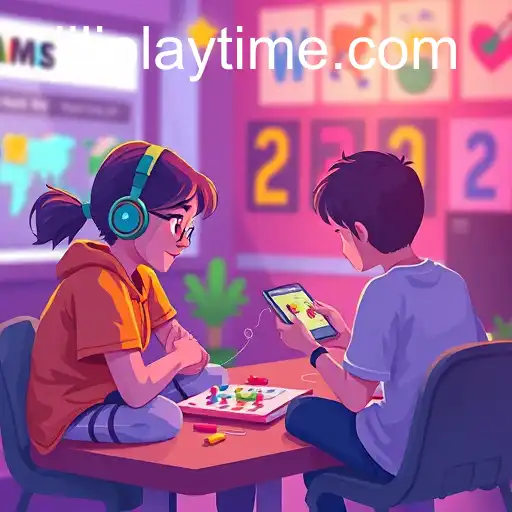
In the digital age, the concept of learning has undergone a massive transformation. One significant development is the rise of 'Educational Fun' games, a category that blends entertainment and education into engaging playtime activities. These games have become an essential tool for educators and parents alike, providing a multifaceted approach to learning that caters to various age groups and educational needs.
Educational Fun games offer a refreshing departure from conventional teaching methods by embedding core educational content into interactive experiences. From mathematics and science to language arts and history, these games cover a broad spectrum of subjects, all while holding the attention of learners through captivating gameplay. The keyword here is 'Playtime,' which signifies the seamless melding of play and learning — turning what used to be tedious textbook exercises into stimulating activities that children, and sometimes even adults, look forward to.
One of the key advantages of Educational Fun games is their ability to individualize the learning process. Online platforms often employ adaptive learning technologies that customize the difficulty level of each game based on the player’s performance. This advancement ensures that students are neither overwhelmed nor bored, maintaining a steady pace that is tailored to each individual's progress.
Moreover, Educational Fun games embrace a variety of formats including mobile apps, online puzzles, virtual reality experiences, and multiplayer challenges, making them accessible to a broader audience. They encourage critical thinking, problem-solving, and creativity, all essential skills in the 21st-century education landscape.
The gamification of education exemplified by these games has proven to be an effective strategy in increasing motivation and engagement among learners. Many studies suggest that students who engage in educational games tend to have improved memory retention and a better understanding of complex concepts. Furthermore, these games introduce an element of competition and achievement, rewarding players for effort and progress, which can drive intrinsic motivation.
In the classroom setting, teachers have started integrating these games into the curriculum, using them as a supplement to traditional teaching resources. This integration helps reinforce lesson material in a manner that is active rather than passive. Meanwhile, at home, parents find Educational Fun games to be a constructive alternative to passive screen time, effectively turning playtime into an opportunity for cognitive development.
As the digital education landscape continues to evolve, the demand for Educational Fun games is expected to grow. Developers are constantly innovating, creating new experiences that align with educational standards and cater to the digital-savvy generation. Thus, Educational Fun games stand at the forefront of a new era in learning — one where knowledge and play go hand in hand, producing well-rounded learners who are prepared to navigate the complexities of the modern world.
In conclusion, Educational Fun games are not just a fleeting trend; they are an integral part of the future of education. By merging playtime with learning, these games ensure that the pursuit of knowledge remains as exciting and dynamic as ever.
